
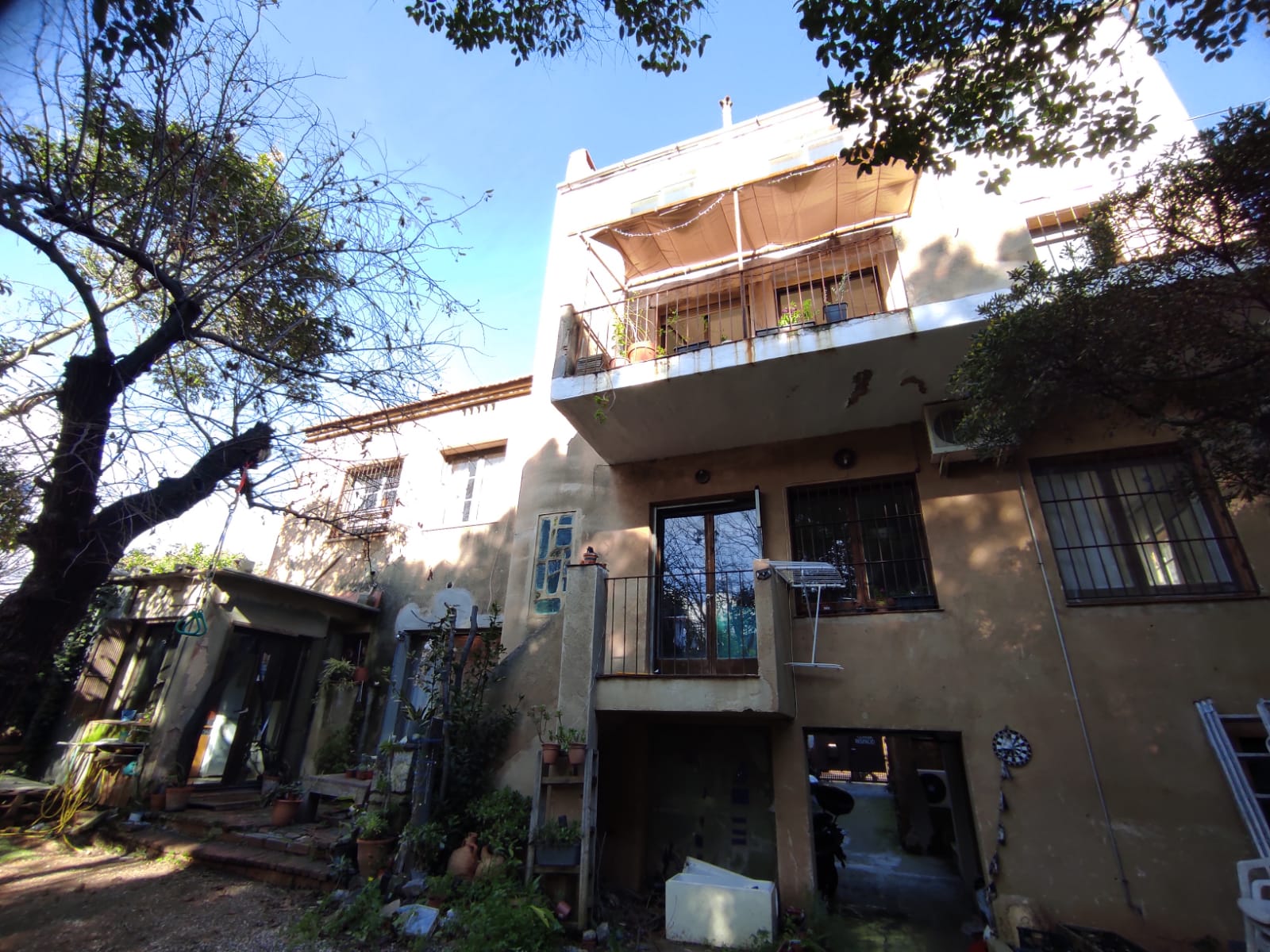
When I tell people I live with 13 people, it never fails to raise a few eyebrows. But to me, it’s not strange at all. In fact, it is a delight. As I come up on my first year anniversary here, I wanted to open the door to my home.
Living in major European cities presents a choice. You can choose between living alone in a hair-raisingly expensive postage-stamp-sized flat, or a crowded shared one with strangers who don’t clean up after themselves. This house, proudly named Can Collet, is neither of those two things.
Set on the western periphery of Barcelona, Can Collet once had sweeping views right down to the sea. Nowadays, neighbouring buildings obscure most of the Mediterranean, though you can still glimpse the blue waves in the distance. To the west, Tibidabo stands proudly on top of the green hills of Barcelona’s closest national park.
The old residence of a celebrated sculptor in the 1970s, the house has been handed down the generations. Handsome and dilapidated, the 3-story masia is a rarity in the city, with its own spacious garden, outhouses still full of dusty statues and plaster casts, and a worn swimming pool that collects leaves. Old trees canopy the garden in which hammocks, open fires and small vegetable patches compete for space. Coloured modernist windows decorate the otherwise unpainted, browning, concrete walls, a nod towards the city’s predilection for the avant-garde.
Inside, the house feels like a warren, with labyrinthine passageways breaking up the 13 bedrooms across different floors and corridors. Right at the top of the house, my window overlooks the hills, as if turned away from the city with its sights set on the never-seen sunset from behind the hills.
Before I know it, people tell me, ‘Oh, it sounds like a commune’. And whilst it’s not a commune, it is true that we are lucky to be a close knit yet diverse community. Deciding who will be our next housemate is always a thorough process involving house visits, vocal debates and votes. Every month or so, we’ll gather after dinner for an assemblea to discuss everything from correct stacking in the dishwasher to our collective response to an increase in the utilities we pay.
Can Collet is neither a house of old friends (indeed, most were strangers when they moved in) nor is it a transient place where people live their own isolated lives. The house’s two kitchens are spaces where we share dinners, watch the latest season of the Traitors, brace the winter’s cold and bear the summer’s heat. People come and go. Chatter is as welcome as the quiet company of another person's presence.
While we don’t have written rules of co-living, there is an incredible amount of mutual respect and shared values. There is a common belief in proactively creating community by proposing plans, listening to one another, and going the extra mile to help out.
Prior to moving here, I spent a year living alone in a cosy apartment in the city centre. Whilst it didn’t lack for comfort or access to the city’s manifold delights, I would choose the vitality and messiness of Can Collet over the surgical stillness of living alone. Perhaps this isn’t that odd: I spent most of my twenties living in shared volunteer flats in Greece.
For that reason, I find it both hard and painful to envisage living in a house with others where there isn’t a shared commitment to community. Our homes are the places where we come to rest and restore. To return to a home of strangers provides neither of these two things. To return to Can Collet provides both.